Meta description: An honest case study on building an Amazon Influencer storefront in the cleaning niche. What works, what fails, realistic timelines, and how shoppable videos drive income.
When I started my Amazon Influencer storefront, I picked cleaning products on purpose.
The choice sounded boring to almost everyone I told. That reaction confirmed I was onto something. Boring niches have buyers with real problems, products people repurchase constantly, and far less competition from polished lifestyle creators.
This article is my case study. I will walk you through what worked, what flopped, how long the returns actually took, and what the income realistically looks like over time. I will keep every claim honest, and I will tell you up front that I am sharing documented program data instead of inventing specific dollar figures from my own account.
If you run a blog or create content and want another income stream, this breakdown gives you the map before you walk the path.
Why I Chose the Cleaning Niche
I treat every project as an income-producing asset first and a creative outlet second. So before I filmed a single video, I researched the numbers.
The cleaning industry was valued at $60 billion in 2022 and is projected to reach $78 billion by 2026, growing at 7.45% annually. That told me demand keeps rising regardless of trends.
Three more reasons sealed the decision:
-
Repeat purchases. People buy cleaning products monthly, which means my content stays relevant for years.
-
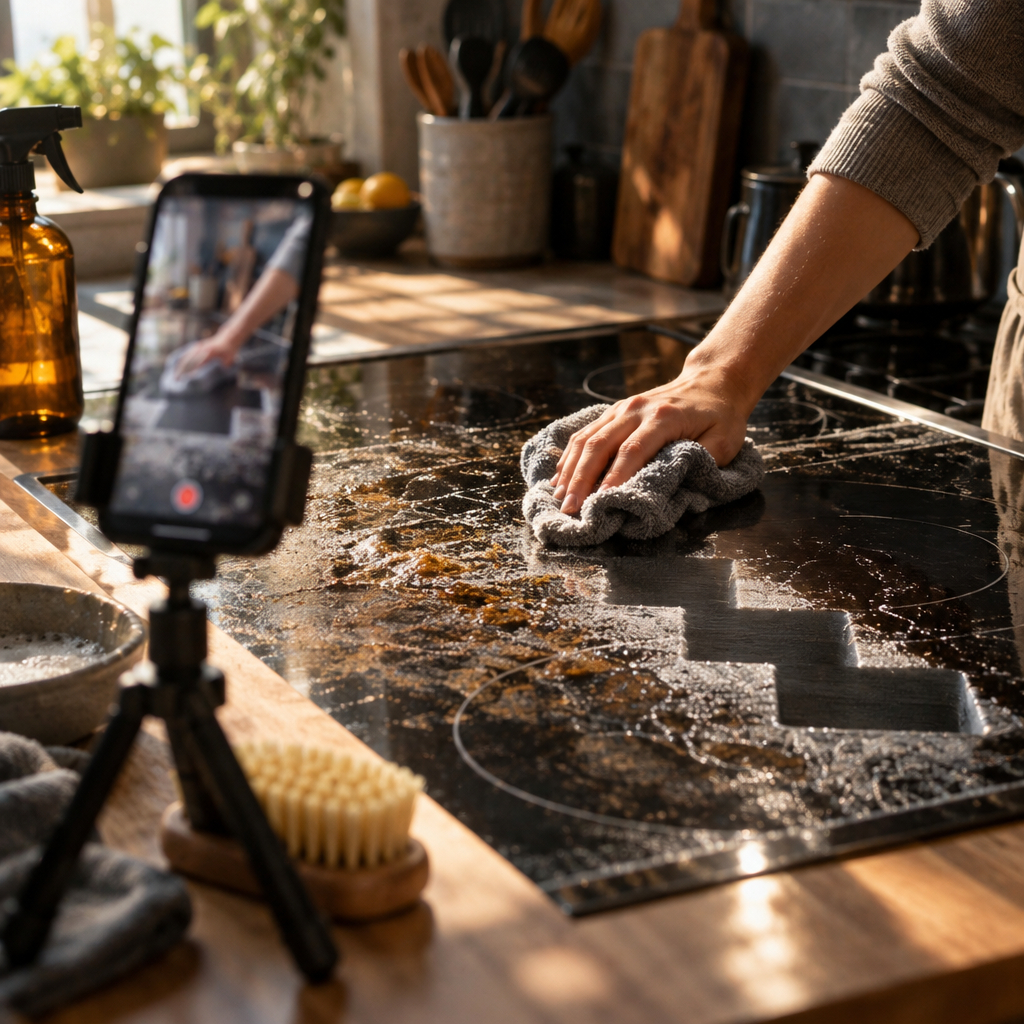
Demonstration-friendly products. A before-and-after shot of a grimy stovetop sells better than any script I could write.
-
Low production barrier. I filmed in my own kitchen with my phone. No studio, no ring light drama.
One honest caveat before you copy this move. Commission rates in this niche sit on the lower end. Home products pay 3% commission, grocery and health items pay just 1%, and kitchen products pay 4.5%. Compare that to luxury beauty at 10%. The cleaning niche wins on volume and repurchase frequency, so you need to plan your content around that math from day one.
What Worked: The Strategies That Actually Produced Income
Onsite Shoppable Videos Became the Engine
Here is the single biggest lesson from my entire experience.
The storefront is the shop window. Onsite videos are the sales floor.
When Amazon places your product video directly on a product detail page, you earn commission when shoppers watch it and buy. You do zero traffic generation for those sales. Amazon brings the buyer, your video closes the deal.
The data backs this up. Product pages that added their first shoppable video saw an average 24% increase in sales, and shoppers who view videos are 3.6x more likely to buy. Amazon rewards that performance. Onsite videos earn base commission plus a 1-5% bonus on purchases within 24 hours of the view.
For active influencers, onsite video commissions make up 60-80% of earnings, while storefront purchases account for 15-30%. Once I understood that split, I restructured my entire workflow around producing more onsite videos.
Batching Honest, Unglamorous Reviews
I filmed videos in batches. Ten products, one afternoon, phone on a tripod.
Each video followed the same simple structure:
-
Show the product solving the actual problem on camera
-
Mention one thing I disliked about it
-
State who should skip this product
That second and third point mattered more than I expected. Videos where I named a flaw converted better, and I believe shoppers reward honesty because video sets accurate expectations. Listings with video see return rates drop because shoppers know exactly what they are buying before checkout.
💡 Tip: Review products you already own first. Your first 30 videos cost you nothing and teach you everything about what Amazon approves and where videos get placed.
Riding Seasonal Demand
Spring cleaning season and Q4 changed my results dramatically. Influencers routinely report Q4 earnings of 3-5x their normal monthly average during Black Friday, Cyber Monday, and the holiday rush. I now plan my heaviest filming for September and October so my catalog is live before the spike.
What Did Not Work
I want this case study to save you from my mistakes, so here they are in plain terms.
Chasing trendy viral products. I filmed videos for a few viral gadgets. The hype died within weeks and those videos now earn almost nothing. Evergreen staples like mops, scrub brushes, and laundry solutions keep paying month after month.
Treating the storefront like a catalog dump. Early on, I added dozens of products with no videos attached. Dead weight. A storefront without video content converts poorly because shoppers get no reason to trust the recommendation.
Expecting the first 20 videos to matter. They taught me the process. They earned very little. The creators earning $2,000-$5,000+ monthly typically maintain libraries of 200-500 quality videos. This is a volume game built on consistency, and I underestimated that at the start.
Ignoring sustainability demand. I added eco-friendly cleaning products late. Consumers are willing to pay an average of 9.7% more for sustainably produced goods, even under cost-of-living pressure. Higher prices mean higher commissions on the same 3% rate. Start with that category earlier than I did.
How Long It Takes to See Returns
This is where I want to be the most honest with you, because the internet is full of inflated screenshots.
Based on documented program data, here is the realistic timeline:
-
Weeks 2-6: First earnings appear, typically $100-$500 monthly once videos get approved and placed
-
Months 3-6: Part-time income of $500-$1,500 monthly with consistent uploads
-
Months 6-12: $1,500-$3,000 monthly becomes achievable with a deep catalog
-
12+ months: Top performers reach $3,000-$5,000+ monthly after sustained library building
My experience tracked with this arc. The early months felt slow and the compounding came later, which matches how every digital asset I have ever built behaves. Blogs work the same way. You front-load the effort and the income arrives on a delay.
Niche creators who post product content 2-3 times per week typically reach $500-$2,000 monthly within 3-6 months. That posting cadence is the real requirement behind every success story in this program.
⚠️ Warning: If you need income in the next 30 days, this program will frustrate you. Build it alongside an existing income stream and let it compound.
What the Income Realistically Looks Like Over Time
I avoid sharing my exact monthly numbers because they fluctuate and I refuse to anchor your expectations to one person’s snapshot. The program-wide data paints a fair picture.
New influencers typically earn $50-$500 per month in their first few months. Established mid-tier creators earn $1,000-$10,000 monthly once their catalog matures. The average annual income for Amazon Influencers in the US sits at $52,176 as of 2026, with most earnings landing between $34,500 and $58,000.
Micro-influencers with 1,000-10,000 followers now earn a median of $312 per month in commissions, up 22% year over year, driven largely by Reels and TikTok traffic pointing to storefronts. One home organization creator in Texas earned $11,400 in a single month after a 47-second Reel hit 9.2 million views. Treat that as an outlier, and treat the median as your planning number.
The income behaves like a staircase. Each batch of approved videos adds a small recurring layer. Established influencers with 100+ videos on popular product pages earn $2,000-$10,000+ monthly from passive onsite commissions alone. That is the destination, and the staircase is how you get there.
How This Fits Into a Bigger Content Strategy
Here is how I think about the storefront inside my overall business.
The Amazon storefront is one asset in a stack. My blog drives search traffic, my videos live on product pages, and the storefront ties recommendations together. Each piece feeds the others, and removing any single piece weakens the whole system.
If you already blog, you hold an advantage. Your product review posts can link to your storefront, your filming skills transfer directly to onsite videos, and your audience already trusts your recommendations. You are adding a monetization layer to work you already do.
My advice follows the same principle I teach in everything: make the path visible, then take the first documented step. Film one honest video about one cleaning product you own today. The system builds from there.
FAQ: Amazon Influencer Storefronts in the Cleaning Niche
How many followers do I need to join the Amazon Influencer Program?
Amazon evaluates engagement over raw follower counts. Micro-influencers with 1,000-10,000 followers earn meaningful commissions in this program, with a median of $312 monthly as of 2026. Focus on an engaged audience in a clear niche when you apply.
Are cleaning products a good niche given the low commission rates?
Yes, with the right expectations. Home products pay 3% and kitchen products pay 4.5%, which sits below categories like luxury beauty at 10%. The niche compensates through high purchase frequency, a market growing toward $78 billion by 2026, and low content competition. Volume carries this niche.
How long until I earn my first commission?
Most creators see first earnings within 2-6 weeks, typically $100-$500 monthly at the start. Reaching $500-$1,500 monthly usually takes 3-6 months of consistent posting.
Do I need a big social media presence to earn from onsite videos?
No. Onsite shoppable videos appear on Amazon product pages, where Amazon supplies the traffic. These videos generate 60-80% of earnings for active influencers, independent of your social following.
How many videos should I aim for?
Start with 30 videos using products you already own, then build steadily. Creators earning $2,000-$5,000+ monthly maintain libraries of 200-500 quality videos. Set a sustainable pace of 2-3 uploads per week and let the catalog compound.
Is this actually passive income?
It becomes passive after an active building phase. Every video requires upfront work, then earns on autopilot once placed on product pages. I describe it as front-loaded income rather than instantly passive income, and that framing keeps expectations honest.
The Takeaway
Building my cleaning-niche storefront taught me the same lesson blogging taught me years ago. Digital assets reward documented, consistent effort over time, and they punish impatience.
Here is your first step: pick five cleaning products in your home, film one honest 60-second review of each, and apply to the Amazon Influencer Program this week. The path is visible now. Walk it.
And if you want help turning content into a full income system, you know where to find me at Inspired to Blog.