Meta description: Brands are moving budgets from celebrity endorsements to niche creators. Learn why cleaning and home content creators are in demand, where the deals come from, and exactly how to land your first one.
I spent some time this month digging into where brand marketing money is actually going in 2026. The numbers surprised me, and I teach this stuff for a living.
Brands are pulling budget away from celebrity endorsements and redirecting it toward niche creators and micro-influencers. If you make cleaning content, home organization videos, or laundry routines for a few thousand loyal followers, you are sitting on exactly the asset brands now want to buy access to.
In this article I’ll show you the data behind the shift, explain why home and cleaning creators specifically benefit, and walk you through the four places these deals come from. Then I’ll give you your first steps.
The Money Trail: What Brands Are Actually Buying in 2026
Follow the budgets and the story becomes clear fast.
According to HubSpot’s State of Marketing report, 32% of marketers now cite micro-influencers as their top-performing creator tier in 2026, more than any other category including celebrities. U.S. creator economy ad spend is projected to hit $43.9 billion this year, up 18% from 2025.
And here is the number that matters most for you: 45.5% of influencer marketing spend now goes to micro and nano influencers with 1,000 to 100,000 followers, according to industry research.
Almost half of the budget is flowing to accounts the size of yours.
Why Brands Made the Switch
Brands made this move because the performance data forced them to. A few numbers from my research:
-
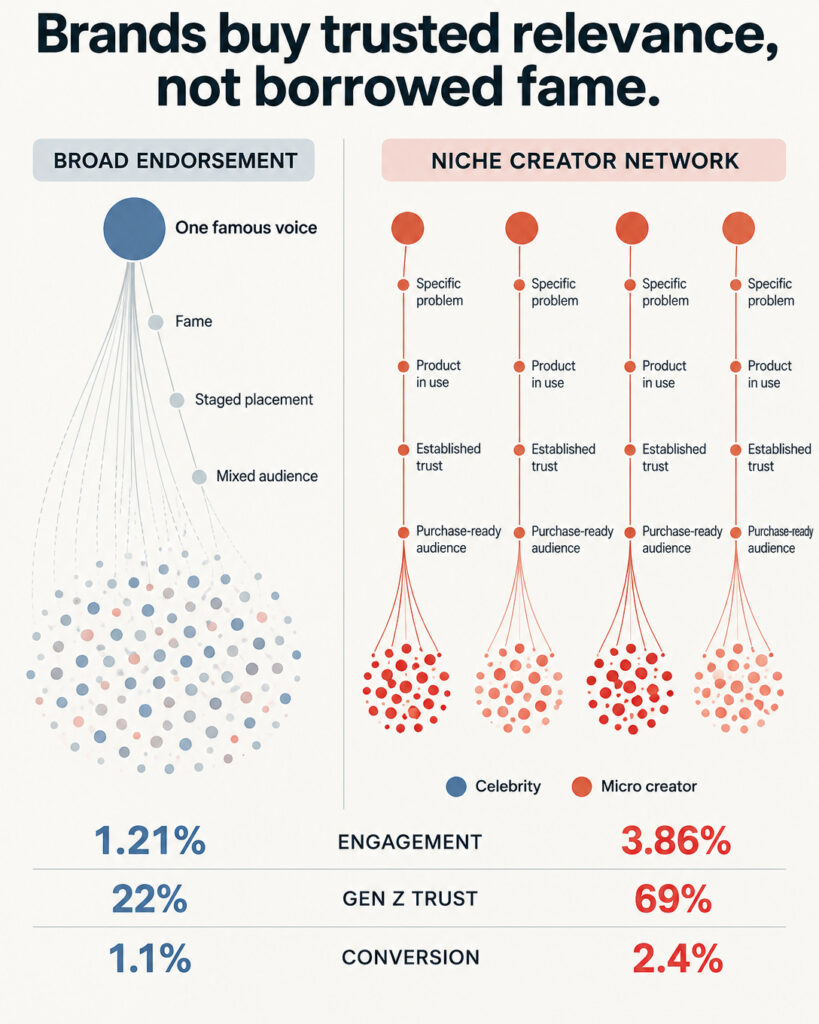
Micro-influencers average a 3.86% engagement rate on Instagram. Mega-influencers with a million-plus followers average 1.21%.
-
Gen Z trusts micro-influencers at 69% versus 22% for celebrities.
-
Micro-influencer recommendations convert at 2.4% versus 1.1% for celebrity endorsements.
-
Brands earn an average of $5.78 for every $1 spent on creator partnerships.
There is also a structural logic at work. A brand that spends $50,000 on one celebrity post can instead work with 50 micro-influencers at $1,000 each, generating 50 pieces of authentic content for 50 distinct communities. The distributed approach wins on reach, trust, and cost.
Why Cleaning and Home Creators Have a Built-In Advantage
Every niche benefits from this shift. Cleaning and home creators benefit more than most, and here is why.
Your Content Is Already a Product Demo
When you film yourself deep cleaning a bathroom or restocking a fridge, the products are on camera doing the work. Brands pay enormous sums trying to manufacture that kind of demonstration. You create it naturally, every single post.
Your Audience Is Purchase-Ready
Someone watching a 45-second video on removing hard water stains has a hard water stain problem right now. They want the exact bottle you held up. That intent explains why creator recommendations in practical niches convert so well.
Trust Is Your Core Asset
Your followers have watched you test products over months. They know when you genuinely like something. A celebrity holding a mop in a glossy ad carries none of that credibility, and consumers know it. Specificity plus trust is the combination brands are paying for.
Where the Deals Actually Come From: Four Channels
This is where I want to get practical, because the opportunity only matters if you know where the door is. There are four main channels. I recommend you understand all four before picking your starting point.
1. Amazon Creator Connections
This program sits on top of the Amazon Influencer and Associates programs and connects you directly with brands running campaigns. Amazon sets a floor of a $5,000 commission budget and a 10% bonus commission per campaign, and some brands pay commissions up to 50%.
The entry requirements are refreshingly low. You need at least 100 clicks through your Amazon influencer or associates links and at least $1 in affiliate commission earned. For an active cleaning creator who links products in captions and storefronts, that threshold is reachable within weeks.
2. TikTok Shop Affiliate
TikTok Shop has become a genuine income engine for home and cleaning creators. Affiliate creator content drives 42% of TikTok Shop US sales volume, which makes creators the single largest sales channel on the platform, per recent data.
The earnings are real at every tier. Micro creators with 10,000 to 100,000 followers who post consistently earn between $500 and $5,000 per month from affiliate commissions. Median earnings for active mid-tier creators sit around $680 per month, which tells you the realistic baseline alongside the upside.
Cleaning products perform especially well here because they are low-cost, visual, and impulse-friendly. A before-and-after video with a product link is a complete sales funnel in under a minute.
3. UGC Platforms
User-generated content work flips the model. Brands pay you a flat fee to create videos they run as their own ads, and your follower count becomes largely irrelevant. What matters is your ability to film a believable product demonstration, and cleaning creators do that in their sleep.
Platforms like Billo, Insense, and brand-run UGC marketplaces list these jobs openly. This channel is ideal while your audience is still small, because you earn from your production skill rather than your reach.
4. Direct Outreach
Pitching brands yourself remains the highest-margin channel, and it works better now than it did five years ago because brand managers are actively hunting for niche creators. 74% of marketers plan to increase influencer budgets in 2026. Someone at those companies has to spend that money.
A simple pitch structure that works:
-
One sentence on who you are and your niche.
-
Two or three audience metrics, with engagement rate featured prominently.
-
One specific content idea featuring their product.
-
A clear ask for rates or a call.
💡 Tip: Lead with engagement rate instead of follower count. A 5,000-follower account with 4% engagement beats a 100,000-follower account with 1% engagement in most brand evaluations, and the data backs you up.
How to Position Yourself for These Deals: A Step-by-Step Start
Here is the sequence I’d follow if I were starting today as a cleaning or home creator.
Step 1: Tighten Your Niche Statement
Write one sentence that describes exactly who you help and how. “I help renters keep small apartments spotless with budget products” is bookable. “I post cleaning videos” is forgettable. Put that sentence in every bio.
Step 2: Build Your Proof Page
Create a simple media kit or a pinned highlight with your engagement rate, audience demographics, and three of your best-performing posts. Brands decide quickly. Make the decision easy.
Step 3: Activate Amazon First
Apply to the Amazon Influencer Program, build a storefront around your most-recommended products, and start linking. Your goal is the 100 clicks and $1 commission that unlock Creator Connections. This is the lowest-friction deal pipeline available to you.
Step 4: Post TikTok Shop Content Weekly
Pick three to five products you genuinely use, attach affiliate links, and publish demonstration content on a schedule. Commission income compounds with your content library, since older videos keep selling.
Step 5: Send Five Pitches a Week
Choose brands whose products already appear in your content. Those pitches convert best because the partnership already exists in practice, unpaid. Aim for long-term arrangements, since 63% of creators say they prefer ongoing partnerships, and brands increasingly structure deals that way too.
⚠️ One honest caveat: performance-based deals now make up 53% of influencer agreements, double the 2024 figure. Brands will measure your results. Treat every partnership like a test you intend to pass, track your link clicks, and share your numbers proactively.
Your Invitation to Start This Week
You have spent months or years building something genuinely valuable: a trusted voice in a specific corner of the internet. Brands have finally caught up to what that is worth. 69% of creators already rely on brand partnerships for the majority of their income, which tells you this is a proven path rather than an experiment.
So here is my direct invitation. This week, do three things:
-
Write your one-sentence niche statement and update your bios.
-
Apply to the Amazon Influencer Program and set up your storefront.
-
Draft one pitch email to a brand whose product already appears in your content.
Each step takes under an hour. Together they open all four deal channels I covered above. The brands are looking for you right now. Make yourself easy to find.
FAQ: Brand Deals for Cleaning and Home Creators
How many followers do I need before brands will work with me?
Fewer than you think. Nearly half of influencer marketing spend goes to creators with 1,000 to 100,000 followers. UGC work requires no minimum audience at all, since brands pay for the content itself.
How much can a micro creator realistically earn?
Active TikTok Shop creators with 10,000 to 100,000 followers earn $500 to $5,000 per month from affiliate commissions, with median earnings around $680 per month for consistent posters. Direct brand deals and UGC fees stack on top of that.
What do I need to join Amazon Creator Connections?
You need acceptance into the Amazon Influencer or Associates program, 100 clicks through your links, and at least $1 in earned commission. Campaigns come with a minimum $5,000 commission budget and a 10% bonus commission.
Should I take flat-fee deals or performance-based deals?
Take both, strategically. Flat fees give you predictable income. Performance deals, now 53% of agreements, reward you when your audience converts, and cleaning content converts well. As your track record grows, negotiate hybrid structures with a base fee plus commission.
What makes a pitch stand out to brands?
Specificity. Name the product, describe the exact video you’ll make, and lead with your engagement rate. Brands reviewing dozens of pitches respond to the creator who has already done the thinking for them.